Casual Causality
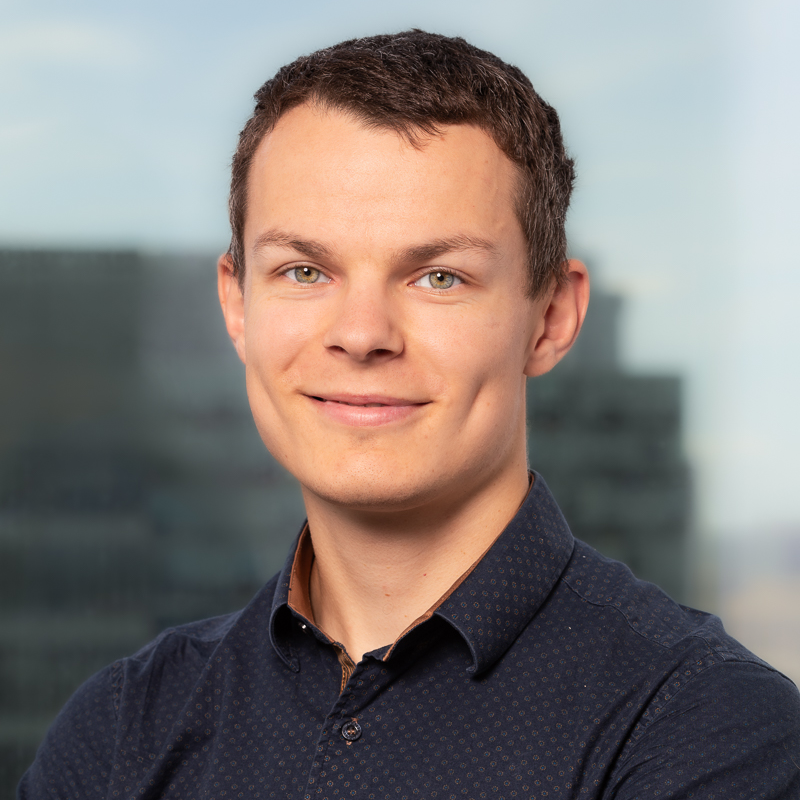
I am an IVADO postdoctoral fellow at the Université de Montréal and Mila, co-supervised by Dhanya Sridhar and Simon Lacoste-Julien. I did my Ph.D. research in the Robust Machine Learning group at the Max Planck Institute of Intelligent Systems in Tübingen, supervised by Wieland Brendel, Ferenc Huszár, Matthias Bethge, and Bernhard Schölkopf. I am part of the ELLIS and IMPRS-IS programs. I have also spent time at the Vector Institute and at the University of Cambridge.
The main motivation for my research is to advance our understanding of how and why deep learning models work. My research toolkit currently focuses around identifiable causal and self-supervised representation learning and out-of-distribution (OOD) generalization, with a focus on compositionality in language models. During my Ph.D., I realized that current machine learning theory is insufficient to explain especially the interesting and useful properties of deep neural networks. I aim to help close this gap, by focusing on:
- extending machine learning theory to understand the role of inductive biases (e.g., model architecture or optimization algorithm)
- grounding machine learning in the physical world via (causal) principles and humanity’s prior knowledge
- extending our understanding of out-of-distribution and compositional generalization
- uncovering overarching patterns across different fields in machine learning
I am also passionate about AI for research: I believe AI can fundamentally transform how we do science. I outlined this vision in a position paper at the P-AGI Workshop @ ICLR 2026 and built the Research Agora, an open-source skills marketplace for AI-assisted research. I also build small tools for researchers — most recently Research Values, a playful Would You Rather for mapping what you actually value in your work. Since July 2026 I am a fellow of the Big-if-True Science accelerator, run by Renaissance Philanthropy with SPRIND, where I design a research programme for automatic, graded verification of scientific claims.
I have done both my M.Sc. and B.Sc. at the Budapest University of Technology in electrical engineering and specialized in control engineering and intelligent systems. In my free time, I enjoy being outdoors and often bring my camera with me.
News
-
Started as an IVADO postdoctoral fellow at Mila and the Université de Montréal, co-supervised by Dhanya Sridhar and Simon Lacoste-Julien.
-
Our tutorial Causal Foundations for Interpretability: What Your Methods Actually Identify is accepted at EMNLP 2026 in Budapest (24–29 October), presented with Shruti Joshi, Aaron Mueller and Dhanya Sridhar.
-
Interpretability as a Science is accepted as a NeurIPS 2026 workshop, in Sydney on 11 or 12 December. I am one of the organizers, and the call for papers is open until 28 August (AoE).
-
Selected for the second cohort of the Big-if-True Science accelerator, run by Renaissance Philanthropy with SPRIND. Through November I am designing a research programme for automatic, graded verification of scientific claims.
Recent Publications
Recent Projects
Research Agora: Claude Code skills, benchmarks & tools for ML researchers — paper writing, citation verification, experiment tracking, LaTeX automation
HALLMARK: Citation hallucination detection benchmark for ML papers — 2,525 entries, 14 hallucination types, 3 difficulty tiers, 10 baselines including LLMs and verification tools
Tools for managing BibTeX bibliographies: automatically update preprints to published versions and filter to only cited references.
A personal website for Patrik Reizinger. Template is courtesy of academicpages.
An educational writing coach for academic prose (VS Code + CLI). Scores LaTeX/Markdown against good writing — Orwell, Strunk, the Economist, Gopen & Swan, Pinker — and teaches why a passage fails.